
Top Rated Android app development services
Partner with us for powerful android apps that amplify your vision and accelerate growth.
Create your unique mark in the app world
We are an Android app development company creating effective, high performance, and robust Android applications for businesses seeking to top the charts. We create unique and attention-grabbing Android apps that succeed in the Google Play Store. Our expertise is backed up by vast experience in developing successful android apps for across industry clientele. This is showcased well enough in our extensive portfolio that contains testaments of our amazing projects. Android app development is one of our strengths and we’d be happy to delight you with our services.
Android app development services
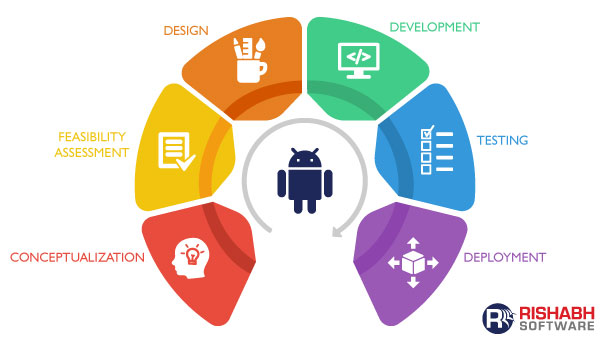
Our android development process goes a full circle as we use the best proven android development tech stack combined with agile workflow. The secret recipe of building the most intuitive apps that ranks top on Google Play Store lies with us.
Android App Development Consulting
Every android app targets a certain user base and particular business goals. To help you create a well-aligned android app, we provide end-to-end android app development consultation. Whether you want advice about the application aspects of the android technology or know about the Android mobile app development, we will be happy to share our expertise.
Custom Android App Development
You must want nothing less than a perfect android app that serves your business objectives to the last strand. Generating a sturdy, presentable, and high serving android app requires plenty and precision led efforts. We learn the details of your business’s needs to devise a customized plan for it. Then, we use the latest Android SDKs to create highly appealing custom Android apps.
Cutting-Edge Android Services
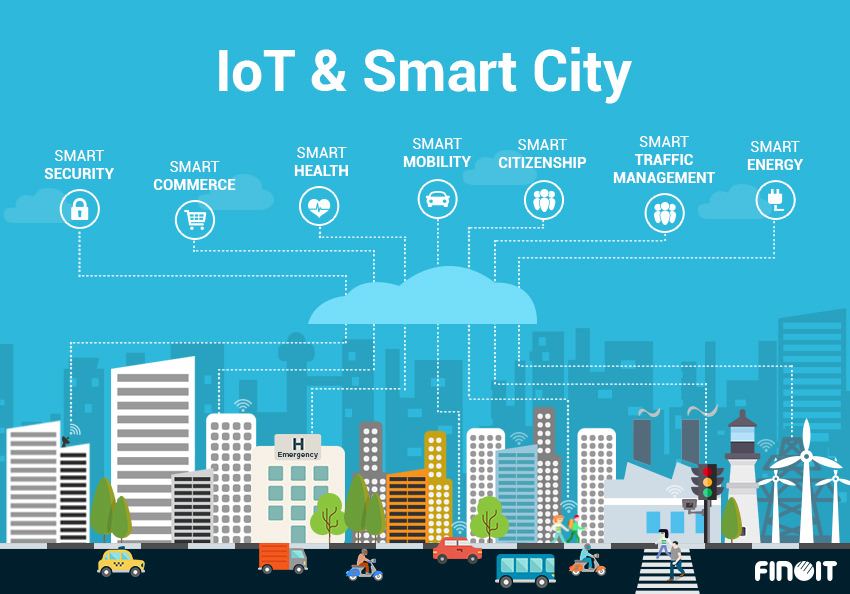
Many recent market trends of smart devices have disrupted the android app development industry highly. Our android app development team has been able to match the pace with experience in the most recent technologies gearing. We offer extensive assistance on ambitious projects, like connecting Android apps with IoT devices or delivering AR/VR app experiences.
Android UI/UX designing
The expansive android ecosystem involves a wide variety of smart devices operating in it. To get the best of android technology, creating innovative and attractive user experiences becomes crucial. We have a team of expert Android app designers that create appealing app experiences for a wide range of android devices and OS.
Hybrid App Development
As an innovative android app development company, we also specialize in creating multi-platform deployable android apps. Our team can code on various systems using hybrid app development techniques. Thus, you can offer both iOS and Android apps without investing in two separate app development projects.
Android App Migrations
We can facilitate an Android app migration or upgrade for any apps that need revitalization. More so, if you hadn’t had your app on the android portal, we will help you get onboard so that you don't miss out on gaining a wider reach. Our Android app development team can transfer your innovations to new and improved systems, streamlining the experience for users.
Android App Support
We don't just design android apps and leave the rest of it for you. Our Android app development team continually upgrades and improves your Android app post-deployment, ensuring continued high performance. We also provide long-term customer service to all the additional requests or questions of your team.
Why choose Android app development
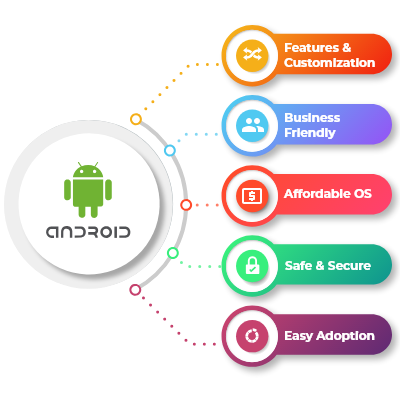
Startups and SMEs can benefit the most from Android technology alongside all other kinds of companies. We ensure maximum profit for all our clients from our custom android app development services. Here is why to choose Android:
- Exposure to multiple platforms
- Simpler integrations
- Innovative and scalable apps
- Larger revenue inflow
Technologies we use
- Mobile frontend
- Mobile backend
- Operating system- Android OS
- Frameworks/SDKs
- Platforms- Amazon Web, AWS, Microsoft Azure, Firebase
- Other- Google Analytics, Firebase
IoT for Agriculture: Smart Farming Solutions
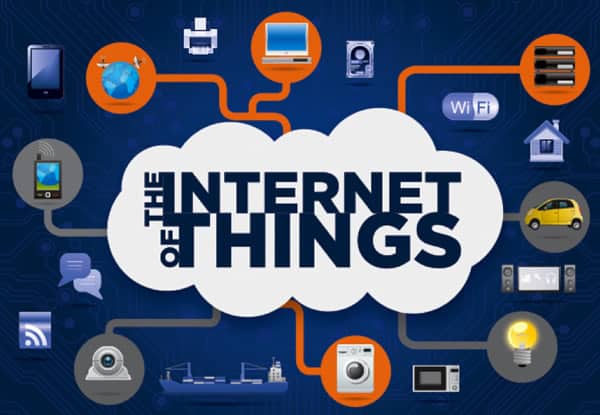
The Internet of Things (IoT) has provided ways to improve nearly every industry imaginable. In agriculture, IoT has not only provided solutions to often time-consuming and tedious tasks but is totally changing the way we think about agriculture. What exactly is a smart farm, though? Here is a rundown of what smart farming is and how it’s changing agriculture.
What Is a Smart Farm?
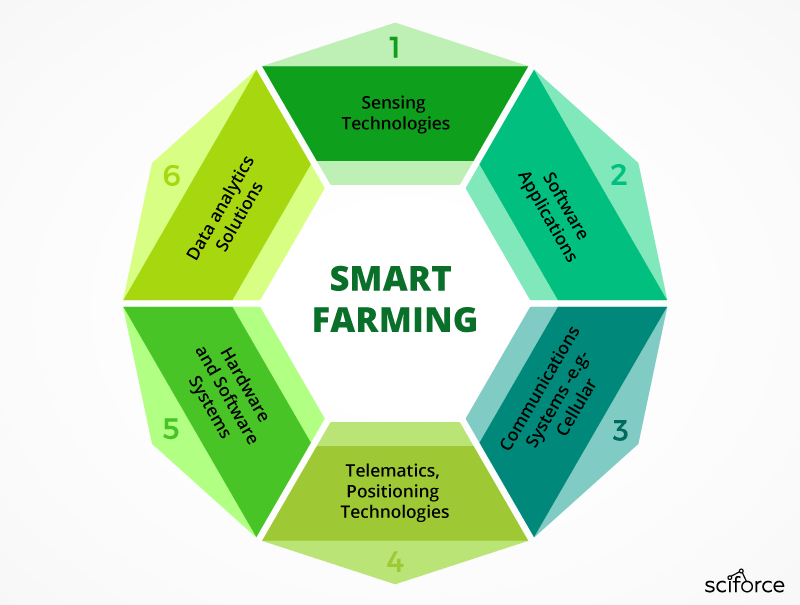
Smart farming refers to managing farms using modern Information and communication technologies to increase the quantity and quality of products while optimizing the human labor required.
Among the technologies available for present-day farmers are:
- Sensors: soil, water, light, humidity, temperature management
- Software: specialized software solutions that target specific farm types or applications agnostic IoT platforms
- Connectivity: cellular, LoRa
- Location: GPS, Satellite
- Robotics: Autonomous tractors, processing facilities
- Data analytics: standalone analytics solutions, data pipelines for downstream solutions
Armed with such tools, farmers can monitor field conditions and make strategic decisions for the whole farm or a single plant without even needing to step foot in the field.
The driving force of smart farming is IoT — connecting machines and sensors integrated on farms to make farming processes data-driven and automated.
The IoT-Based Smart Farming Cycle
The core of IoT is the data you can draw from things and transmit over the internet. To optimize the farming process, IoT devices installed on a farm should collect and process data in a repetitive cycle that enables farmers to react quickly to emerging issues and changes in ambient conditions.
Smart farming follows a cycle similar to this one:
1. Observation . Sensors record observational data from the crops, livestock, soil, or atmosphere.
2. Diagnostics. The sensor values are fed to a cloud-hosted IoT platform with predefined decision rules and models—also called “business logic”—that ascertain the condition of the examined object and identify any deficiencies or needs.
3. Decisions . After issues are revealed, the user, and/or machine learning-driven components of the IoT platform determine whether location-specific treatment is necessary and, if so, which.
4. Action . After end-user evaluation and action, the cycle repeats from the beginning.
IoT Solutions to Agricultural Problems
Many believe that IoT can add value to all areas of farming, from growing crops to forestry. While there are several ways that IoT can improve farming, two of the major ways IoT can revolutionize agriculture are precision farming and farming automation.
Precision Farming
Precision farming, or precision agriculture, is an umbrella concept for IoT-based approaches that make farming more controlled and accurate. In simple words, plants and cattle get precisely the treatment they need, determined by machines with superhuman accuracy. The biggest difference from the classical approach is that precision farming allows decisions to be made per square meter or even per plant/animal rather than for a field.
By precisely measuring variations within a field, farmers can boost the effectiveness of pesticides and fertilizers, or use them selectively.
Precision Livestock Farming
As is the case of precision agriculture, smart farming techniques enable farmers better to monitor the needs of individual animals and adjust their nutrition accordingly, thereby preventing disease and enhancing herd health.
Large farm owners can use wireless IoT applications to monitor the location, well-being, and health of their cattle. With this information, they can identify sick animals, so that they can be separated from the herd to prevent the spread of disease.
Automation in Smart Greenhouses
Traditional greenhouses control the environmental parameters through manual intervention or a proportional control mechanism, which often results in production loss, energy loss, and increased labor costs.
IoT-driven smart greenhouses can intelligently monitor as well as control the climate, eliminating the need for manual intervention. Various sensors are deployed to measure the environmental parameters according to the specific requirements of the crop. That data is stored in a cloud-based platform for further processing and control with minimal manual intervention.
Agricultural Drones
Agriculture is one of the major verticals to incorporate both ground-based and aerial drones for crop health assessment, irrigation, crop monitoring, crop spraying, planting, soil and field analysis, and other spheres.
Since drones collect multispectral, thermal, and visual imagery while flying, the data they gather provide farmers with insights into a whole array of metrics: plant health indices, plant counting and yield prediction, plant height measurement, canopy cover mapping, field water pond mapping, scouting reports, stockpile measuring, chlorophyll measurement, nitrogen content in wheat, drainage mapping, weed pressure mapping, and so on.
Importantly, IoT-based smart farming doesn’t only target large-scale farming operations; it can add value to emerging trends in agriculture like organic farming, family farming, including breeding particular cattle and/or growing specific cultures, preservation of particular or high-quality varieties, and enhance highly transparent farming to consumers, society and market consciousness.
Third Green Revolution
Smart farming and IoT-driven agriculture are paving the way for what can be called a Third Green Revolution.
Following the plant breeding and genetics revolutions, the Third Green Revolution is taking over agriculture. That revolution draws upon the combined application of data-driven analytics technologies, such as precision farming equipment, IoT, big data analytics, Unmanned Aerial Vehicles (UAVs or drones), robotics, etc.
In the future, this smart farming revolution depicts, pesticide and fertilizer use will drop while overall efficiency will rise. IoT technologies will enable better food traceability, which in turn will lead to increased food safety. It will also be beneficial for the environment, through, for example, more efficient use of water, or optimization of treatments and inputs.